

 ENG
ENG

Spätná väzba

Správy z priemyslu
Jun 22,2026
Stainless Steel Single Edge Hair Cutting Blade | Cloud Blade
What Is a Stainless Steel Single Edge Hair Cutting Blade
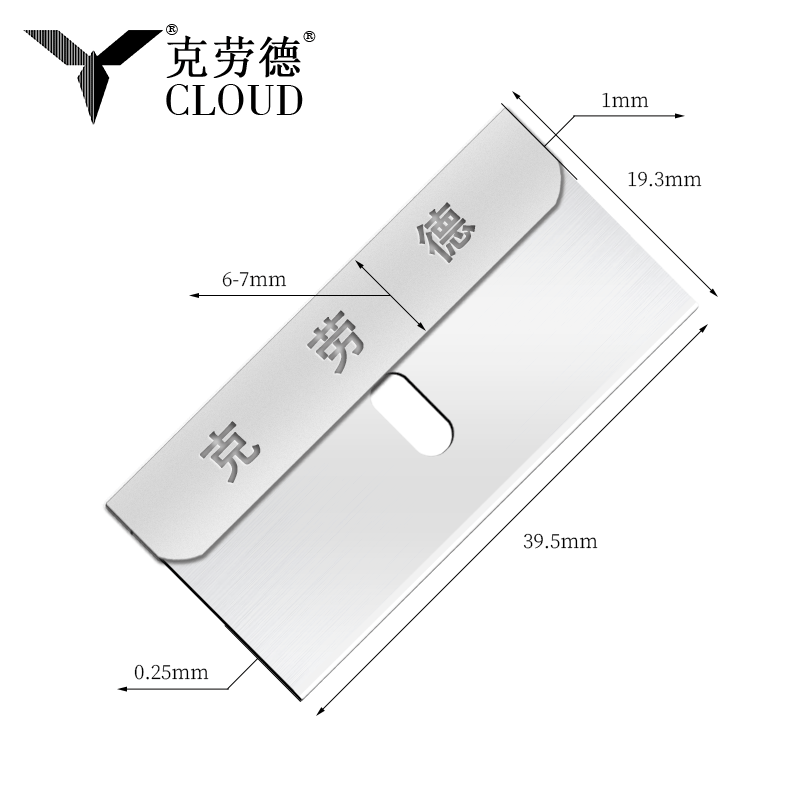
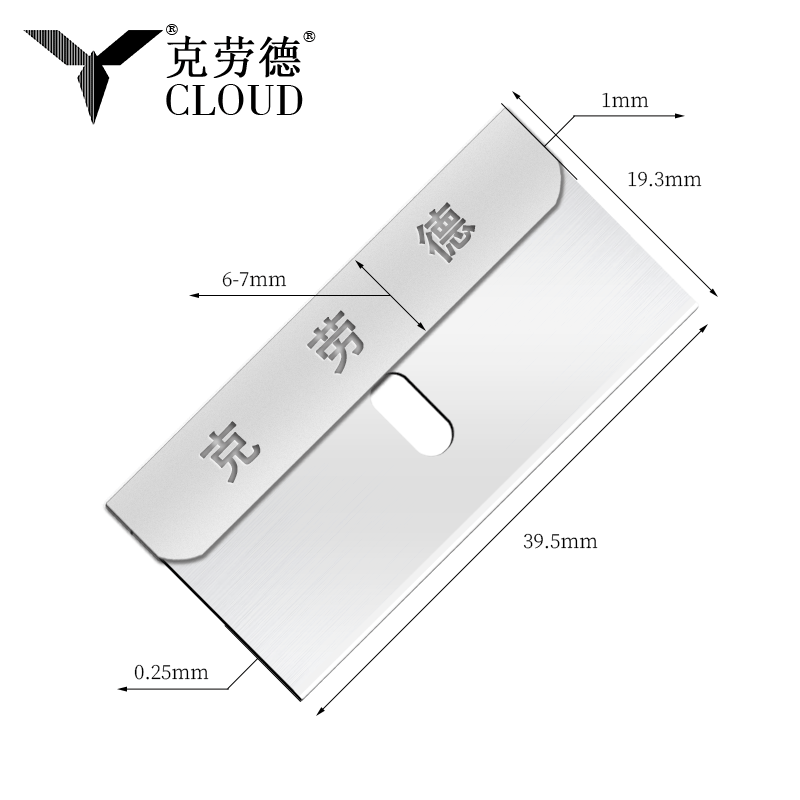
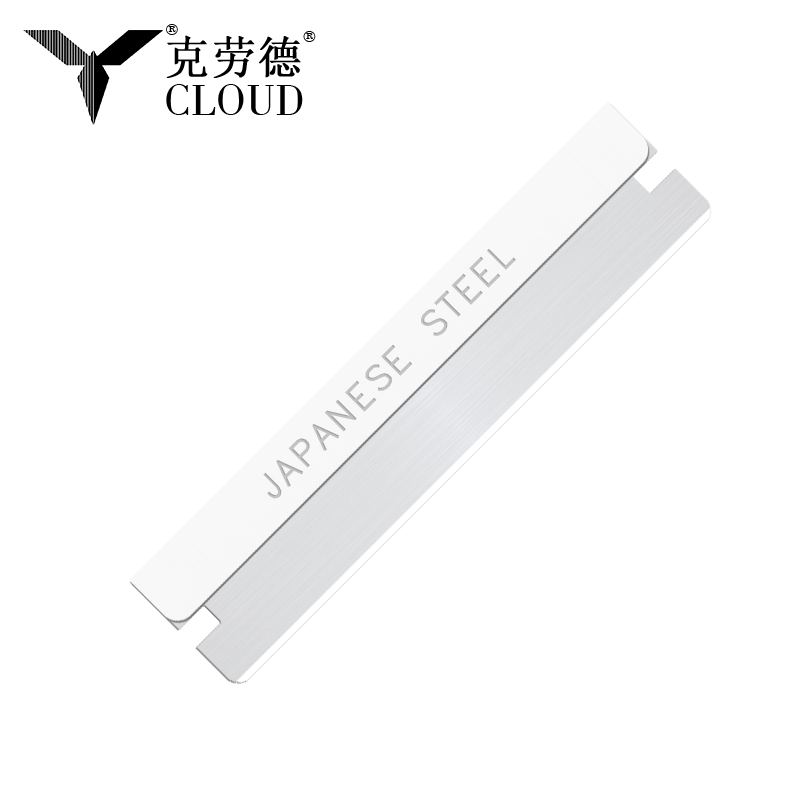
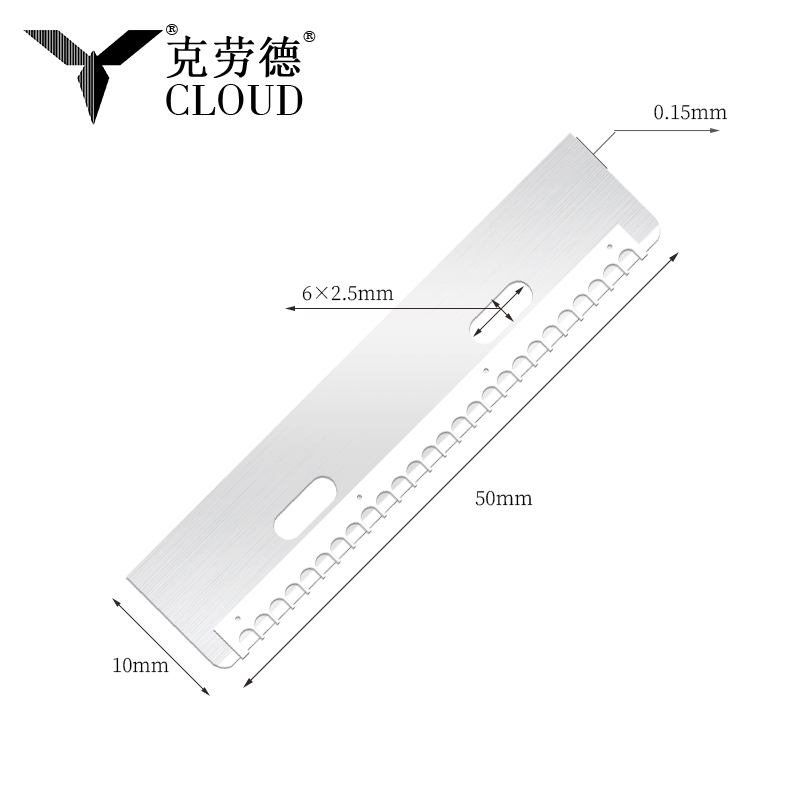
A stainless steel single edge hair cutting blade is a flat, precision-ground cutting tool sharpened along one long edge, with the opposite side left unsharpened as a reinforced spine. This asymmetric construction gives the blade two key properties: a consistently sharp cutting edge and a stable, safe backing surface that improves directional control during use.
Unlike double edge blades that expose two cutting surfaces, a single edge razor blade channels all cutting force through one precisely angled edge. For professional hair cutting applications, this translates to better handling accuracy, reduced risk of unintentional contact, and more predictable results during detailed work such as texturizing, tapering, and hairline definition.
The reinforced spine also adds rigidity. A blade that flexes under pressure loses cutting consistency—something professional barbers and salon technicians cannot afford. Stainless steel single edge hair cutting blades are manufactured to tight dimensional tolerances, ensuring the edge geometry remains uniform from the first cut to the last.
Why Stainless Steel Is the Preferred Material for Hair Cutting Blades
Material selection is the single most important factor in blade performance and longevity. Among available materials, stainless steel has become the industry standard for professional hair cutting blades for three practical reasons: corrosion resistance, sustained sharpness, and hygiene compatibility.
Professional hair cutting environments expose blades to moisture constantly—rinsing between clients, spray bottles, damp hair. Carbon steel blades, while capable of achieving extreme initial sharpness, oxidize quickly under these conditions. Stainless steel resists rust formation significantly better, maintaining structural integrity and a clean cutting surface even with repeated moisture exposure.
Sharpness retention is another critical advantage. Stainless steel alloys used in professional blades are formulated to maintain their edge geometry through multiple cutting sessions. This means fewer blade changes per workday, lower material costs over time, and consistent cutting performance that clients can rely on.
From a hygiene standpoint, stainless steel is non-porous and compatible with standard salon disinfection protocols. Blades can be wiped with isopropyl alcohol between clients without accelerating surface degradation—a requirement that many regulatory environments enforce for shared cutting tools.
Coating Technologies That Extend Blade Performance
Raw stainless steel delivers a strong foundation, but modern manufacturing adds functional coatings that significantly extend the working life and comfort of each blade. Understanding these coatings helps buyers evaluate quality claims beyond the base material specification.
Nano-chromium and chromium-ceramic coatings are applied through magnetron sputtering—a vacuum deposition process that bonds a thin, extremely hard layer directly onto the blade edge. This coating increases surface hardness beyond what the underlying steel alone can achieve, improving edge retention under repeated friction. Blades with chromium-ceramic coatings maintain cutting sharpness noticeably longer than uncoated equivalents.
Tungsten coatings serve a similar edge-hardening purpose, particularly suited to blades used on coarser or thicker hair types where edge wear accelerates. Some premium manufacturing processes combine chromium, ceramic, and tungsten into a layered coating system to maximize durability across variable hair textures.
PTFE (Teflon) polymer coatings address a different performance variable: glide. A micro-thin PTFE layer reduces friction between the blade and hair during the cutting stroke. For clients with fine or damaged hair, this reduction in drag can meaningfully improve comfort and reduce the risk of pulling or snagging. It also reduces the tactile resistance barbers feel in the hand, which translates to smoother, more controlled strokes over extended work sessions.
When sourcing blades, look for manufacturers who specify both the coating type and the deposition method. Sputtering-deposited coatings bond more uniformly and durably than spray-applied alternatives, and this distinction directly affects how long the coating maintains its performance in daily professional use.
Key Applications: Where Single Edge Hair Cutting Blades Excel
Single edge hair cutting blades are used across a specific set of professional techniques where a conventional scissor or clipper cannot achieve the same result. Their thin profile and precise single-edge geometry make them the tool of choice for the following applications.
- Texturizing and point cutting: The blade's fine edge allows barbers to remove bulk and add movement to hair without creating blunt cut lines. This technique is particularly valued in modern men's styling where graduated volume is required.
- Hairline definition: Clean neckline and sideburn shaping requires a tool that can follow curved contours accurately. Single edge blades mounted in a shavette or straight razor handle provide the tactile feedback needed for this precision work.
- Layer blending: Razor cutting creates softer, blended layers compared to scissor cuts. For clients with straight or medium-density hair, blade-cut layers move more naturally and require less styling product to hold shape.
- Facial hair detailing: Beyond scalp hair, single edge blades are used to clean up beard outlines, define mustache edges, and remove stray hairs around styled facial hair.
For barbers who require a blade that transitions between cutting and grooming tasks within a single appointment, the versatility of multipurpose single edge safety razor blades offers a practical solution that reduces tool-switching during service delivery.
How to Choose the Right Blade: Specifications and Buying Guide
Professional buyers evaluating stainless steel single edge hair cutting blades should assess five specification areas before committing to a supplier or SKU.
| Specification | What to Look For | Why It Matters |
|---|---|---|
| Blade thickness | 0.08–0.15 mm for hair cutting | Thinner blades flex less and deliver finer cuts on soft tissue |
| Steel grade | Swedish Sandvik or equivalent high-carbon stainless | Determines baseline hardness, edge retention, and corrosion resistance |
| Coating type | Chromium-ceramic + PTFE for hair use | Hardened edge for longevity; PTFE for reduced drag on hair |
| Packaging format | Individually wrapped in wax paper or dispenser cartridge | Protects edge sharpness during storage; supports hygiene requirements |
| Quantity per pack | 100-count packs for salon use; bulk cases for distribution | Aligns purchase volume with replacement frequency and storage capacity |
Replacement frequency is a practical purchasing variable that affects total cost of ownership. In a busy salon environment, blades are typically replaced after each client or after a set number of cuts depending on hair density. Higher-quality coated stainless blades sustain performance longer, reducing per-service blade cost even when the unit price is higher than uncoated alternatives.
Buyers sourcing for hospitality, medical grooming, or travel kit contexts may find that a manual disposable razor configuration better suits single-use hygiene requirements, while salon and barbershop operations benefit more from bulk-pack single edge blade procurement.
Sourcing Stainless Steel Single Edge Hair Cutting Blades from a Manufacturer
Working directly with a blade manufacturer rather than a distributor offers three practical advantages: access to custom specifications, better pricing on volume orders, and direct quality accountability. For buyers who need blades tailored to specific razor handle designs, proprietary salon branding, or particular coating combinations, OEM manufacturing is the most efficient path.
When evaluating manufacturers, verify the following before placing an initial order:
- ISO certification: ISO 9001 certification indicates the manufacturer operates under a documented quality management system with traceable production controls. This is particularly important for blades used in professional or medical-adjacent grooming contexts.
- Coating capability: Ask whether the manufacturer uses in-house sputtering equipment or outsources the coating process. In-house coating allows tighter quality control and faster response to specification adjustments.
- Sample policy: Reputable manufacturers offer free samples for pre-order testing. This allows buyers to validate sharpness, coating performance, and packaging compatibility before committing to a production run.
- Minimum order quantities: Understand MOQ requirements for both standard and custom specifications. Manufacturers with automated production lines can often accommodate lower MOQs on standard SKUs while requiring larger commitments for fully customized blades.
Shanghai Cloud Blade Manufacturing Co., Ltd. has been producing professional blades since 1997, operating eight automated production lines with an annual output exceeding 300 million blades. The company holds ISO 9001 certification and uses in-house magnetron sputtering equipment for chromium-ceramic and PTFE coating application. OEM customization and free samples are available for qualified buyers. Contact the team to discuss your specification requirements and request a sample kit.
Súvisiace produkty
Hľadáte spoľahlivú čepeľ?
Spolupracujte s výrobcom.
Inquiry Us Now

-
 +86-400 9915 887
 -
 +86-021-57644936
 -
 [email protected]
 -
 č. 2066, Yushu Road, okres Songjiang, Šanghaj, Čína
RÝCHLE ODKAZY
 Home
HomePRODUKTY
QR KÓD
Autorské práva © 2025 Shanghai Cloud Blade Manufacturing Co., Ltd. All rights reserved.

